


Burberry's 170 Portrait Campaign: 7 Brand Strategy Lessons From a 170-Year Icon
A 170-year-old fashion house has just launched one of the simplest branding ideas of the year: 170 portraits for 170 years. Burberry's new anniversary campaign, reported on September 29, 2026, puts its signature outerwear back at the centre of the story. The lesson for marketers is bigger than luxury fashion. When a brand knows what it truly owns in the customer's mind, it can build modern relevance without abandoning its heritage.
For businesses working on brand strategy development, brand positioning, content marketing or a brand refresh, this campaign is a useful case study in how to turn one core product truth into a global creative platform.
What Burberry actually did
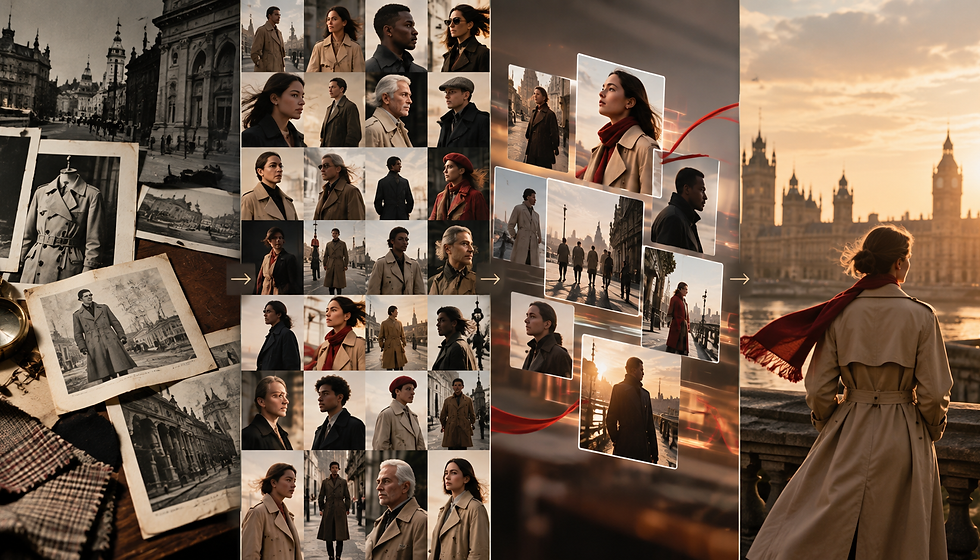
The campaign is called 170: The Anniversary Portraits. Instead of introducing hundreds of new messages, Burberry focused on only 10 outerwear styles and showed them through 170 different portraits. The cast spans people in London, New York, Seoul and Shanghai, including street-cast locals, people from art, literature, sport and music, and members of the Burberry team.
The creative idea is beautifully easy to understand: the product stays recognisable, while the people, styling, cities and personalities keep changing. That gives the campaign both consistency and variety, which is one of the hardest balances in brand communication.
Lesson 1: Own one thing before trying to own everything
Burberry has spent years experimenting across fashion categories, but its strongest brand memory remains outerwear, especially the trench. The current strategy is refocusing marketing and merchandising around those core products. That is classic brand positioning: identify the association your audience already gives you permission to own, then make it more distinctive.
Many brands do the opposite. They add new services, new audiences, new taglines and new campaigns until nobody can clearly explain what the brand stands for. Strong brand strategy development often begins with subtraction, not addition.
Lesson 2: Heritage works best when it is made participatory
A heritage anniversary can easily become a museum piece: old photographs, dates and self-congratulation. Burberry instead uses the anniversary as a frame for contemporary self-expression. The 170 portraits make the history feel alive because the same product is interpreted by many different people.
This is useful for any established company considering rebranding or a brand refresh. You do not have to erase history to look current. The better question is: which part of your history can today's audience participate in?
Lesson 3: Repetition can increase creativity
Only 10 outerwear styles appear across 170 portraits. That constraint is part of the creative strength. When the product universe is deliberately narrow, the campaign can explore personality, geography, styling, casting, photography and cultural context without losing brand recognition.
For social media creatives and content calendars, this is an important operating principle. A content team does not need 30 unrelated ideas every month. It can often build stronger memory by repeating one strategic idea through 30 interesting executions.
Lesson 4: A global campaign does not have to look generic
The portraits span multiple major cities, but the idea does not rely on a bland 'global' visual language. Instead, the same brand asset travels through different faces, streets and cultural settings. That makes the campaign scalable without making every market feel identical.
Brands entering new regions can use the same logic: keep the core brand story fixed, but localise the human context. This is relevant for social media strategy, influencer marketing, retail branding, advertising campaigns and even website content.
Lesson 5: Product truth is stronger than campaign decoration
According to MediaPost's report, Burberry's earlier Portraits of an Icon campaign contributed to a 19% increase in new rainwear customers. The company also reported double-digit growth in outerwear sales in the quarter. These results matter because the creative work is attached to a product category that already carries brand meaning.
The takeaway is not that every campaign needs a trench coat. It is that creative work performs better when it amplifies a genuine product truth. Beautiful ad creatives, motion graphics, brand films and influencer content cannot permanently compensate for weak positioning.
Lesson 6: Brand consistency and individuality can coexist
The campaign demonstrates a smart tension: every portrait is different, but together they are unmistakably part of the same system. That is exactly what a good brand identity should achieve. Brand guidelines should not make every creative look identical. They should create enough structure that different executions still feel related.
This is where brand identity design, photography direction, typography, colour, casting, composition and brand story all work together. A strong brand book is not a cage. It is a system for creative consistency.
Lesson 7: Build a content engine, not one hero asset
One hundred and seventy portraits naturally create a large content library. The campaign can live across social posts, editorial features, retail screens, digital advertising, PR, influencer conversations, website modules and potentially offline formats. One idea creates many distribution opportunities.
This is increasingly important for modern content marketing. Instead of producing one expensive campaign asset and then asking what to post next, brands should design campaigns that generate multiple useful pieces from day one.
The numbers make the strategy more interesting
The latest reported quarter gives the campaign useful commercial context. Burberry's comparable store sales rose 5%, with the Americas up 12% and China up 9%. Gen Z buyers were also reported to be growing at a double-digit rate. These figures do not prove that one campaign caused all the growth, but they do show why the brand's return to outerwear deserves attention.
Good marketing analysis separates correlation from causation. The safer lesson is that the company's clearer focus on core products, together with stronger creative communication, is happening alongside improving commercial performance.
How a smaller brand can apply this tomorrow
You do not need 170 portraits or a luxury budget. Start by identifying one product, service or belief your customers already associate with you. Build one clear campaign idea around it. Then create multiple expressions: customer portraits, founder stories, product use cases, before-and-after examples, short reels, carousel posts, testimonial edits, photography, motion graphics and a long-form case study.
The objective is not content volume for its own sake. The objective is repeated memory. If every execution strengthens the same strategic association, your brand becomes easier to remember and easier to explain.
A simple brand strategy checklist
Ask five questions before your next campaign. What do we want to be known for? Which product or service proves that position best? What visual or verbal asset can we repeat? How can different people or markets reinterpret the same idea? And can the campaign generate enough content to work across social media, advertising, website, PR and offline touchpoints?
What this means for brands working with Aditya Sturdy Technology
At Aditya Sturdy Technology, the most useful lesson from this campaign is the connection between strategy and execution. Brand positioning should influence brand identity design. Brand identity should influence photography and video. Those assets should feed social media marketing, content marketing, advertising and website communication. When each service works from the same central idea, the brand becomes more coherent.
For businesses evaluating brand strategy development, rebranding, social media creatives, brand films, performance marketing or integrated offline and online marketing, the goal should not be to produce more disconnected deliverables. It should be to create one recognisable system that becomes stronger every time people see it.
Frequently asked questions
What is brand strategy development? Brand strategy development is the process of defining what a brand stands for, who it serves, how it is positioned, what makes it distinctive and how that strategy should guide communication, identity and customer experience.
What is the difference between brand strategy and brand identity design? Brand strategy defines the meaning and positioning of the brand. Brand identity design translates that strategy into visual and verbal assets such as logo, typography, colour, imagery, tone and brand guidelines.
Can heritage brands rebrand without losing recognition? Yes. The strongest brand refreshes usually preserve valuable memory structures while updating how those assets are expressed for current audiences.
Why are campaign case studies useful for marketers? Case studies show how positioning, creative execution, distribution and business context work together. They are more useful than copying a visual trend without understanding the strategic reason behind it.
Source
Source: MediaPost, 'Burberry Celebrates Outerwear With 170 Portraits,' published September 29, 2026. https://www.mediapost.com/publications/article/418350/burberry-celebrates-outerwear-with-170-portraits.html
Explore Aditya Sturdy Technology: https://www.adityak.com/
